June 24, 2026

Minnesota businesses operate in an environment where severe weather is part of doing business. Winter blizzards, ice storms, spring flooding, severe thunderstorms, and high winds can disrupt operations with little warning.
While many organizations focus on immediate concerns such as employee safety and facility access, the larger risk often comes from operational downtime. When employees cannot access critical systems, communication breaks down, or business applications become unavailable, productivity suffers, and customer service can be affected.
For organizations throughout Minneapolis and the Twin Cities, weather-related disruptions can impact revenue, employee performance, customer relationships, and long-term business growth.
The question isn't whether severe weather will occur. The question is whether your business is prepared to continue operating when it does.
Many business owners assume severe weather only becomes a problem when roads are unsafe or when offices lose power.
In reality, weather-related disruptions can affect nearly every aspect of business operations.
Common impacts include:
For businesses that rely heavily on technology, even a short disruption can create significant operational challenges.
A snowstorm may prevent employees from reaching the office, but the greater concern is whether those employees can continue working remotely while maintaining access to the systems and information they need.
Severe weather disruptions are not hypothetical risks for Minnesota organizations.
Businesses throughout the Twin Cities regularly face operational challenges caused by winter storms, localized flooding, utility outages, and transportation disruptions. While some weather events last only a few hours, others can create operational issues that extend for several days.

In many cases, the greatest business losses are not caused by physical damage. Instead, organizations lose productivity because employees cannot access applications, customer communications are delayed, or critical workflows are interrupted.
Consider a professional services firm that closes its office during a major snowstorm. If employees cannot securely access client files, answer customer calls, or connect to business applications, the organization may lose an entire day of productivity even though its facility remains undamaged.
Similarly, a manufacturer may avoid direct storm damage but still experience delays if vendors, suppliers, or logistics partners are impacted by the same weather event.
These scenarios highlight an important reality: business continuity planning is not simply about recovering after a disaster. It is about maintaining operations while disruptions are occurring.
Technology now plays a central role in how organizations operate.
Businesses depend on cloud platforms, communication systems, accounting software, CRM applications, file storage solutions, and digital workflows to serve customers and manage operations.
Because of this reliance, continuity planning has evolved far beyond traditional disaster recovery.
A modern business continuity strategy should address:
The goal isn't simply restoring systems after an outage.
The goal is to maintain business operations during the disruption itself.
Organizations that plan ahead are often able to continue serving customers while competitors struggle to recover.
Businesses throughout Minneapolis, St. Paul, Bloomington, Maple Grove, Eden Prairie, Plymouth, and surrounding communities face a variety of weather-related risks each year.

Heavy snowfall and dangerous road conditions can force office closures and make travel difficult for employees.
Even if a business remains open, staffing shortages and transportation challenges can affect productivity.
Ice accumulation can damage power lines, impact internet connectivity, and create extended outages that affect both office and remote employees.
Minnesota frequently experiences strong storms capable of producing damaging winds, lightning, and localized flooding.
Power interruptions caused by summer storms can bring business operations to a halt if contingency plans are not in place.
Flooding can impact office facilities, data centers, network infrastructure, and employee access to business locations.
Organizations that rely heavily on on-premises systems often face greater risk when physical facilities become inaccessible.
Imagine a major winter storm is forecast across the Twin Cities.
Local schools close.
Road conditions deteriorate rapidly.
Your office decides to close for employee safety.
Now consider the following questions:
If the answer to several of these questions is "I'm not sure," your organization may have continuity gaps that should be addressed before a real emergency occurs.
The best time to identify weaknesses is before severe weather puts your operations to the test.

Many organizations believe continuity planning begins and ends with data backups.
While backups are important, they represent only one piece of a larger preparedness strategy.
A comprehensive business continuity plan should include the following components:
Identify the systems, departments, and processes that are essential to daily operations.
Determine the financial and operational consequences if those resources become unavailable.
Establish recovery objectives and define acceptable downtime for critical business functions.
Not every system needs to be restored at the same speed.
Document how leadership will communicate with employees during a disruption.
Communication plans should include primary and backup communication methods.
Ensure employees have secure access to applications, files, collaboration tools, and technical support when working remotely.
Identify which vendors are critical to operations and develop contingency plans in case they experience disruptions.
Plans should be tested regularly through tabletop exercises, recovery testing, and communication drills.
Testing often reveals weaknesses that would otherwise remain hidden until an actual emergency occurs.
Cloud technologies have transformed how organizations prepare for operational disruptions.
Businesses that leverage cloud-based solutions can often continue operating even when employees cannot access physical office locations.
Examples include:
When properly implemented, these technologies help employees remain productive from virtually any location.
However, technology alone is not enough.
Without documented procedures, employee training, communication plans, and recovery strategies, even the best technology solutions may fail to deliver the desired results during an emergency.
Backups are important, but they only address data recovery.
They do not solve communication challenges, employee access issues, operational disruptions, or vendor-related problems.
Many organizations create continuity plans that sit untouched for years.
Without testing, businesses may discover critical weaknesses during an actual emergency.
Internet connectivity has become essential for daily operations.
Without redundancy or contingency planning, a single outage can significantly impact productivity.
Employees need more than laptops.
They need secure access, documented procedures, communication tools, and support resources.
Business continuity involves people, processes, vendors, facilities, and technology.
It requires participation from leadership across the organization.
Many organizations don't realize they have continuity weaknesses until a disruption occurs.
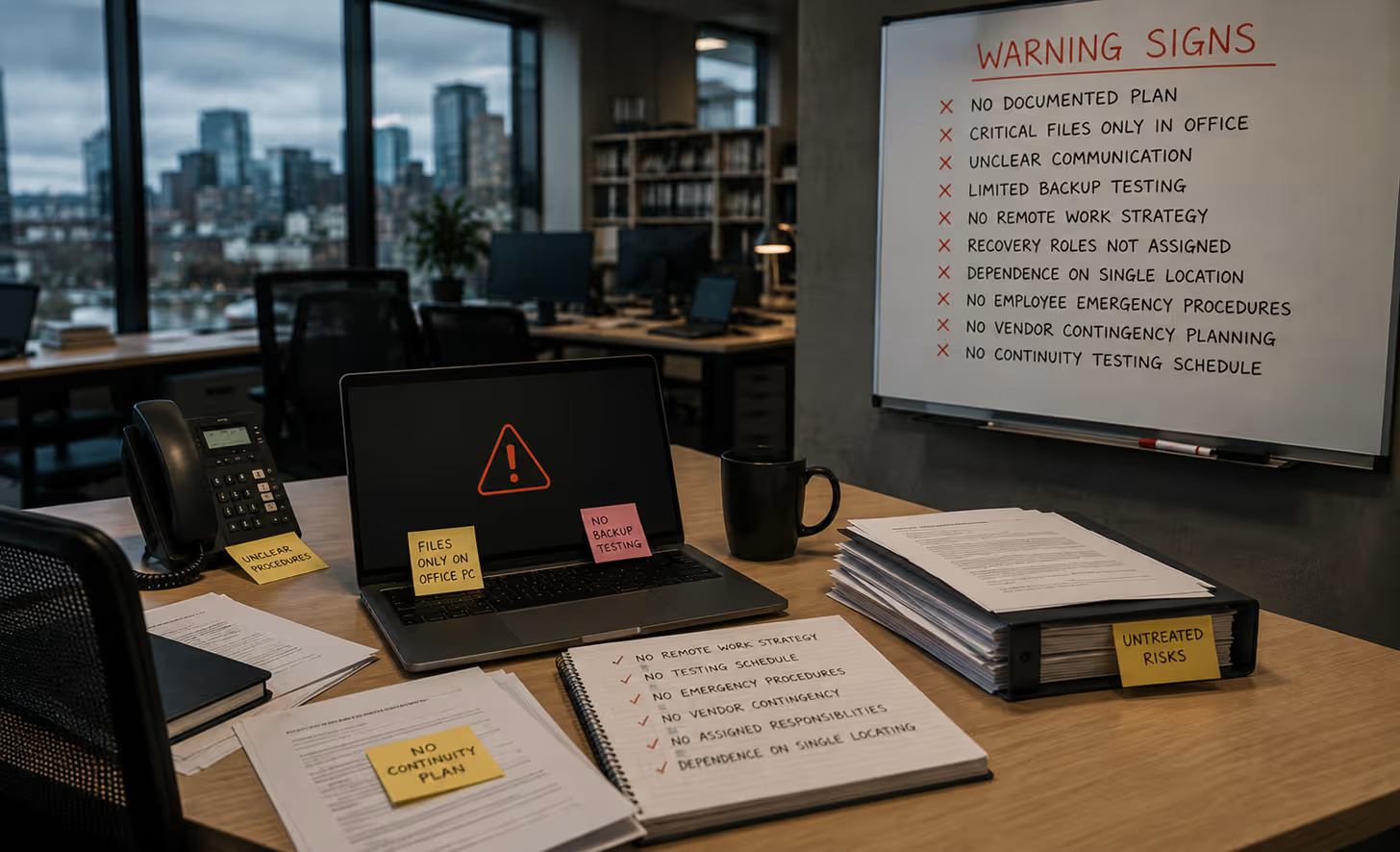
Common warning signs include:
Addressing these issues before severe weather strikes can significantly reduce risk.
Business continuity planning is often viewed as an insurance policy against disruption.
In reality, it can strengthen everyday business operations.
Organizations with mature continuity programs often experience:
These benefits extend beyond severe weather and help support long-term business growth.
The ability to maintain operations during unexpected disruptions has become a competitive advantage.
Organizations across Minneapolis and the Twin Cities are recognizing that continuity planning is no longer reserved for large enterprises.

Small and midsize businesses rely heavily on technology, digital communication, cloud applications, and distributed workforces. As a result, even short disruptions can affect productivity, customer service, and profitability.
By investing in a structured continuity strategy, businesses can identify vulnerabilities, improve preparedness, reduce downtime, and strengthen operational resilience.
Minnesota businesses have always faced weather-related challenges, but today's technology-dependent environments have increased the potential impact of operational disruptions.
Whether the threat comes from a winter blizzard, an ice storm, a severe thunderstorm, a flooding event, or an extended power outage, organizations that prepare in advance are generally able to respond more effectively and recover more quickly.
Business continuity planning is not simply an IT initiative. It is a business strategy that helps protect employees, maintain customer service, preserve productivity, and reduce financial risk.
For organizations throughout Minneapolis and the Twin Cities, the most effective continuity programs combine technology, documented procedures, employee training, and regular testing. By identifying vulnerabilities before severe weather strikes, businesses can build resilience and maintain operations during disruptions.
The question is no longer whether severe weather will impact Minnesota businesses.
The question is whether your organization is prepared to continue serving customers when it does.