June 24, 2026

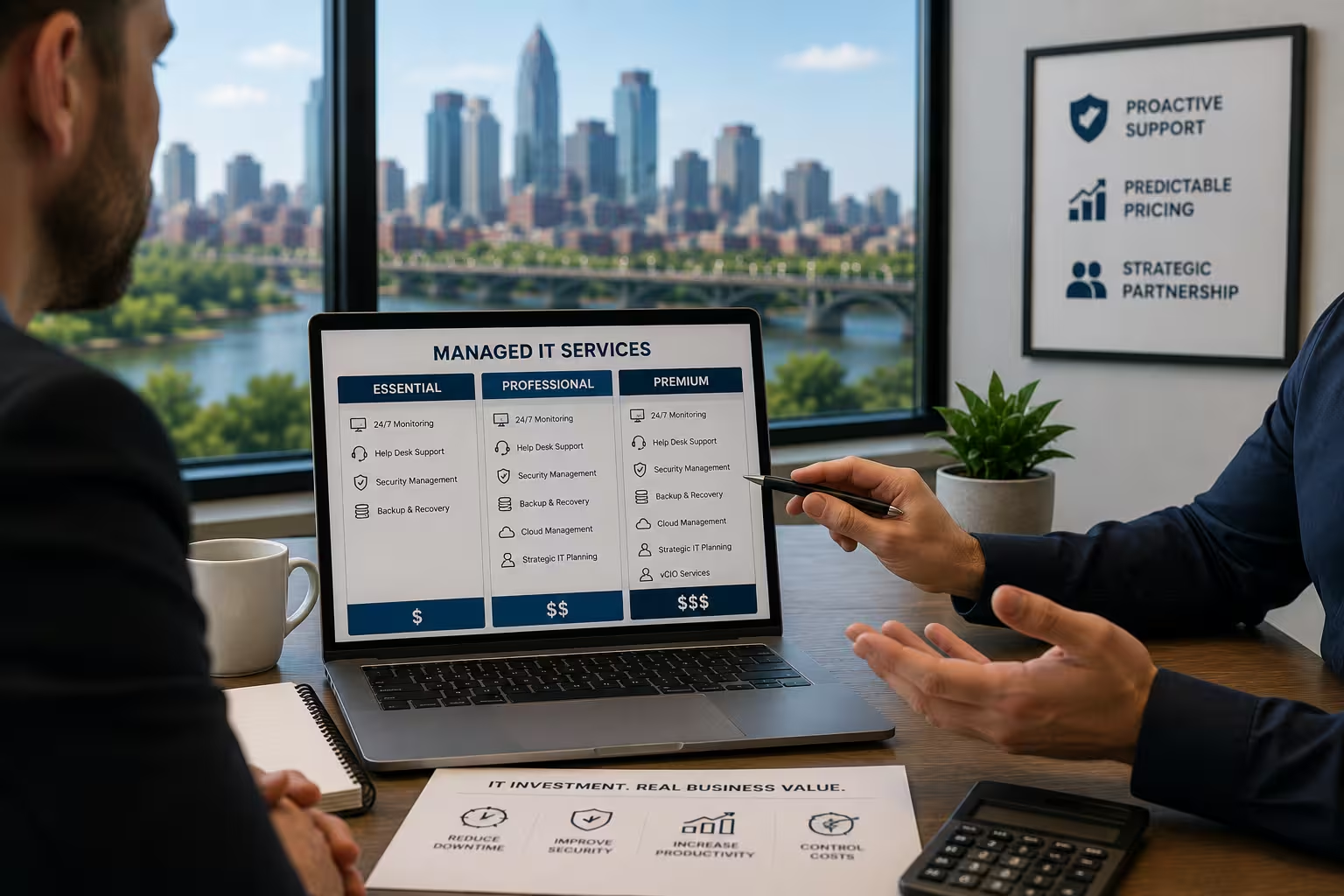
Managed IT services refer to a comprehensive approach to managing an organization’s information technology needs, offering a more proactive and strategic solution compared to traditional IT support models. At its core, managed IT services entail outsourcing daily IT operations to a specialized third-party provider known as a managed service provider (MSP). This arrangement not only encapsulates regular maintenance and support but also encompasses a diverse suite of services tailored to enhance operational efficiency and secure a company’s technological infrastructure.
One of the principal distinctions between traditional IT support and managed services lies in their operational philosophy. Traditional IT support typically operates on a reactive model, addressing issues post-occurrence, which can lead to downtimes and operational disruptions. In contrast, managed IT services adopt a proactive framework, focusing on preemptive measures to prevent technological failures and reduce risks. This forward-thinking strategy ultimately allows businesses to run smoothly while minimizing interruption to daily activities.
Typical offerings within managed IT services include network management, which ensures that all network components operate seamlessly; cybersecurity solutions that protect against an array of online threats; data backup that secures critical information; and disaster recovery planning to equip organizations with a robust strategy for data restoration after unexpected incidents. Moreover, managed service providers often utilize industry-leading technology and best practices to enhance these services, thereby providing companies with access to resources that may be otherwise unattainable.
.avif)
In summary, managed IT services encompass an all-encompassing suite of IT solutions designed to optimize performance, enhance security, and ultimately save businesses time and money. With a focus on proactive management, organizations can experience improved operational efficiency and a significant reduction in unexpected IT-related costs.
In today’s competitive landscape, businesses are constantly seeking ways to optimize their operations while managing costs. One approach that has gained significant traction is the adoption of managed IT services. By outsourcing IT needs to specialized service providers, companies can unlock numerous financial benefits, leading to long-term cost savings. A key advantage of managed IT services is the reduction of overhead expenses. Maintaining an in-house IT team often comes with high salaries, ongoing training costs, and additional benefits, all of which can strain a company’s budget. In contrast, managed service providers offer scalable solutions, allowing companies to pay only for the services they need, resulting in more predictable pricing structures.
Furthermore, businesses can eliminate the need for extensive in-house IT departments, allowing them to reallocate resources to other core areas of their operations. This strategic move not only streamlines enterprise operations but also reduces administrative burdens, enabling companies to focus on growth and innovation. Additionally, managed IT service providers have the expertise and resources to negotiate better technology deals. Their established relationships with hardware and software vendors often translate into access to the latest tools and technology at significantly reduced rates. This advantage allows businesses to enhance their tech infrastructure without incurring substantial upfront investments.
.avif)
Moreover, the implementation of proactive IT management by managed service providers minimizes downtime and the associated costs of business interruption. With 24/7 monitoring and rapid response to potential issues, businesses can operate more efficiently and avoid the costly disruptions associated with IT failures. Overall, the financial benefits of outsourcing IT cannot be overstated. By leveraging managed IT services, businesses can achieve significant cost savings, improved efficiency, and access to cutting-edge technology, all of which contribute to a healthier bottom line.
In the fast-paced world of business, efficiency and productivity are of paramount importance. Outsourcing IT services to managed service providers can significantly save time for organizations, allowing them to redirect focus on their core business functions. By delegating routine maintenance, updates, and troubleshooting to IT professionals, internal teams can concentrate on strategic initiatives instead of getting bogged down in technical issues.
One of the main advantages of managed IT services is their ability to provide timely support, which leads to faster response times. When businesses encounter technological problems, waiting for internal IT staff to become available can hinder operations. In contrast, outsourced IT firms typically have a dedicated team available to address concerns immediately. This quick turnaround decreases downtime and improves overall system performance, which is crucial in maintaining seamless business operations.
Moreover, managed IT services bring a wealth of expertise to the table. These professionals are well-versed in managing complex IT tasks and can implement the latest technologies or strategies quickly and effectively. This proficiency not only leads to proper system management, but it also ensures that businesses are equipped with the most current technological solutions without requiring extensive training for internal teams.
Finally, when organizations utilize managed IT services, they benefit from proactive monitoring and maintenance. This approach minimizes potential system failures before they escalate into significant issues. As a result, companies experience fewer interruptions and can allocate more time to activities that drive growth and innovation.
.avif)
In conclusion, outsourcing IT to managed services providers not only enhances operational efficiency but also empowers businesses to maximize their resources by allowing internal teams to concentrate on their primary objectives. Investing in managed IT services ultimately streamlines operations and supports sustained success.
Selecting a managed IT services provider is a critical decision that can significantly impact your business operations and efficiency. To ensure that you partner with a provider best suited to your needs, it’s essential to evaluate several key factors. One of the foremost considerations is the service level agreement (SLA). The SLA outlines the expected performance standards, response times, and responsibilities of the provider. A comprehensive SLA ensures transparency and accountability, which helps in maintaining a smooth operational flow.
Another important aspect to contemplate is the scalability of the services provided. As your business expands, your IT requirements will evolve. Therefore, it is crucial to choose a managed IT services provider that offers flexible solutions capable of growing alongside your business. This adaptability is vital for supporting new technologies, increased data loads, and other emerging requirements in a rapidly changing landscape.
Industry expertise cannot be overlooked when selecting a provider. The ideal managed IT service provider should have a deep understanding of your specific industry and the unique challenges it presents. This expertise can lead to tailored solutions that enhance your operations and improve overall performance.
Customer support quality is another significant factor to assess. A reliable provider should offer comprehensive support, including 24/7 availability and multiple communication channels. Prompt and effective customer service can alleviate issues before they escalate, ensuring uninterrupted business operations.
Lastly, aligning with a managed IT services provider that comprehends your specific business challenges is essential. A provider that actively engages in understanding your goals and pain points will be better positioned to deliver relevant solutions. It is advisable to conduct a thorough comparison of potential providers, examining their track records, client reviews, and case studies. These evaluations will enable you to make an informed decision, ultimately maximizing the value your business derives from managed IT services.