October 9, 2026

In today’s fast-evolving business environment, technology is no longer just a support system—it is a core driver of productivity, security, and growth. Businesses rely on IT for everything from communication and operations to customer service and data management. However, as technology becomes more complex, managing IT internally has become increasingly difficult and expensive.
Looking for a partner rather than a guide? See our managed IT services in Minneapolis.
For businesses in Minneapolis, this challenge is even more significant. With rising cybersecurity threats, increasing reliance on cloud platforms, and the demand for uninterrupted operations, traditional IT management approaches are no longer enough. Even a small system failure can result in downtime, lost revenue, and reduced customer trust.
This is where managed IT services in Minneapolis offer a smarter, more strategic solution. By outsourcing IT management to experienced professionals, businesses can shift from a reactive approach to a proactive one—preventing issues before they occur and ensuring systems run smoothly at all times.
Managed IT services involve outsourcing your company’s IT operations to a specialized provider, known as a Managed Service Provider (MSP). These providers take responsibility for managing, monitoring, and supporting your IT infrastructure on an ongoing basis.
Unlike traditional IT support, which focuses on fixing problems after they arise, managed IT services emphasize continuous monitoring, proactive maintenance, and long-term optimization.

In essence, managed IT services act as a fully outsourced IT department that operates proactively rather than reactively.
Managing IT internally often leads to unpredictable expenses. Hardware failures, emergency repairs, and system upgrades can quickly increase costs.
With managed IT services, businesses benefit from a fixed monthly pricing model, which allows for better financial planning.
Why this matters:
IT issues can occur at any time, not just during business hours. Without continuous monitoring, small problems can quickly escalate into major disruptions.
Managed IT providers ensure round-the-clock oversight, allowing them to detect and resolve issues early.

Key advantages:
Cybersecurity is one of the biggest concerns for modern businesses. Threats are becoming more advanced, and even small companies are frequent targets.
Managed IT services provide multi-layered security solutions, including real-time threat detection, system updates, and access controls.
Benefits include:
Building an in-house IT team requires significant investment and may still result in limited expertise.
Managed IT services provide access to a team of professionals with specialized knowledge in different areas of IT.
What you gain:
Frequent IT issues can disrupt workflows and reduce employee efficiency.
By ensuring systems run smoothly, managed IT services help create a more productive work environment.
Results:
As businesses grow, their IT needs evolve. Expanding infrastructure without proper planning can be challenging.
Managed IT services offer flexible and scalable solutions that grow with your business.

Advantages:
Traditional IT support focuses on fixing problems after they occur, which can lead to disruptions.
Managed IT services emphasize preventative maintenance, ensuring systems are always optimized.
Includes:
Data is one of the most valuable assets for any business. Losing it can be catastrophic.
Managed IT providers ensure data is regularly backed up and can be restored quickly.
Key benefits:
Businesses must comply with various data protection regulations, especially when handling sensitive information.
Managed IT services help implement the necessary policies and systems to maintain compliance.
Why it’s important:
Keeping up with technological advancements can be costly and time-consuming.
Managed IT providers ensure your systems are always updated with the latest tools and innovations.
Impact:
The cost of managed IT services depends on the specific needs of your business.

Most Minneapolis businesses prefer flat-rate pricing for simplicity and predictability.
Choosing between managed IT services and an in-house team depends on your business needs.
Key differences:
For most growing businesses, managed IT services provide greater value and flexibility.
Minneapolis businesses are increasingly dependent on technology, making IT management more critical than ever.
Working with a local provider offers additional advantages:
A local provider ensures more responsive and tailored IT support.
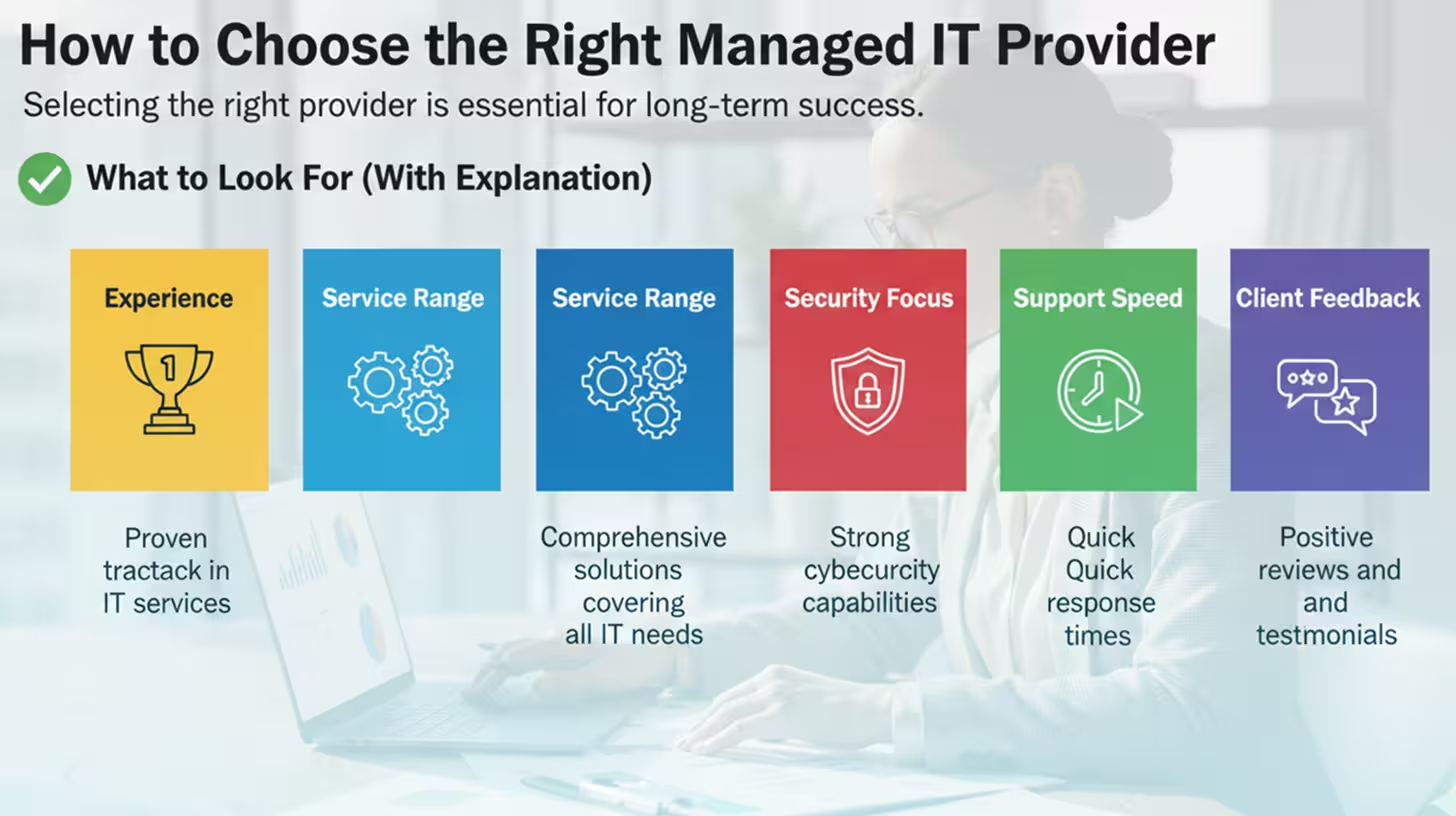
Selecting the right provider is essential for long-term success.
They involve outsourcing IT management to a provider who ensures systems are secure and optimized.
Monitoring, support, cybersecurity, backup, and cloud management.
Costs vary but are typically offered as monthly plans.
Yes, they improve efficiency, reduce costs, and enhance security.
Managing IT internally is becoming increasingly difficult as technology evolves. Businesses need a more reliable, efficient, and cost-effective approach.
Managed IT services in Minneapolis provide that solution—offering proactive support, advanced security, and scalable systems that help businesses grow with confidence.
By partnering with the right provider, companies can reduce risks, improve performance, and focus on what matters most: their core business.