September 10, 2026
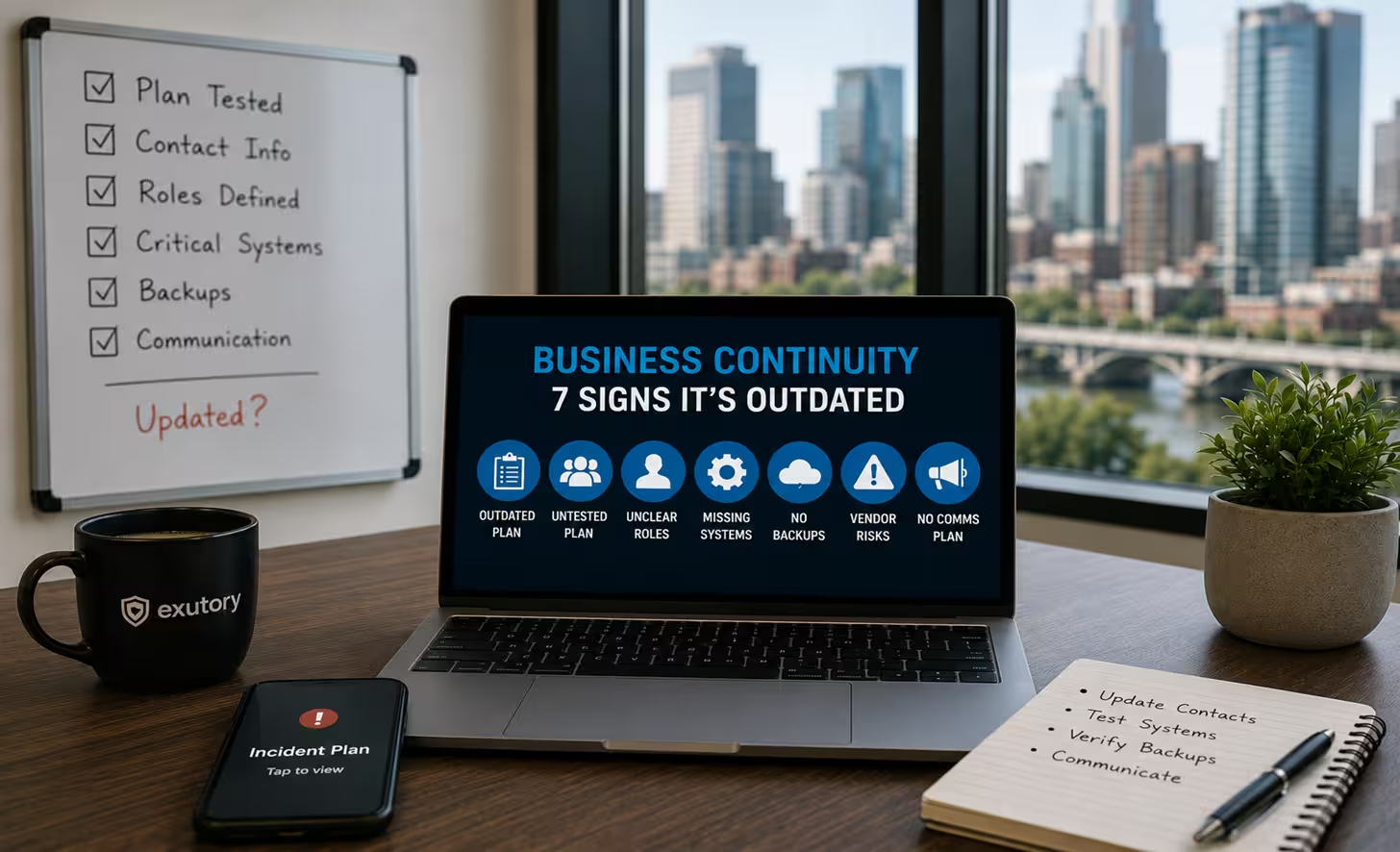
Most business continuity plans aren't wrong when they're written. They go wrong later, quietly, as the company changes around them. Here are seven concrete signs that the plan sitting in your shared drive no longer matches how your business actually runs.
Continuity plans need a scheduled review at least once a year, with a lighter check-in roughly every six months for higher-risk processes (Arcserve, 2025). Ask around the office when the plan was last opened. Most of the time, nobody can give you a real answer.
Plans don't expire on a fixed date, but they do erode. Staff change. Software gets replaced. Vendor contracts shift. None of that shows up in the document unless someone goes looking for it.
A last review that predates your current office setup or current software stack is the clearest signal you have that the plan is already behind.
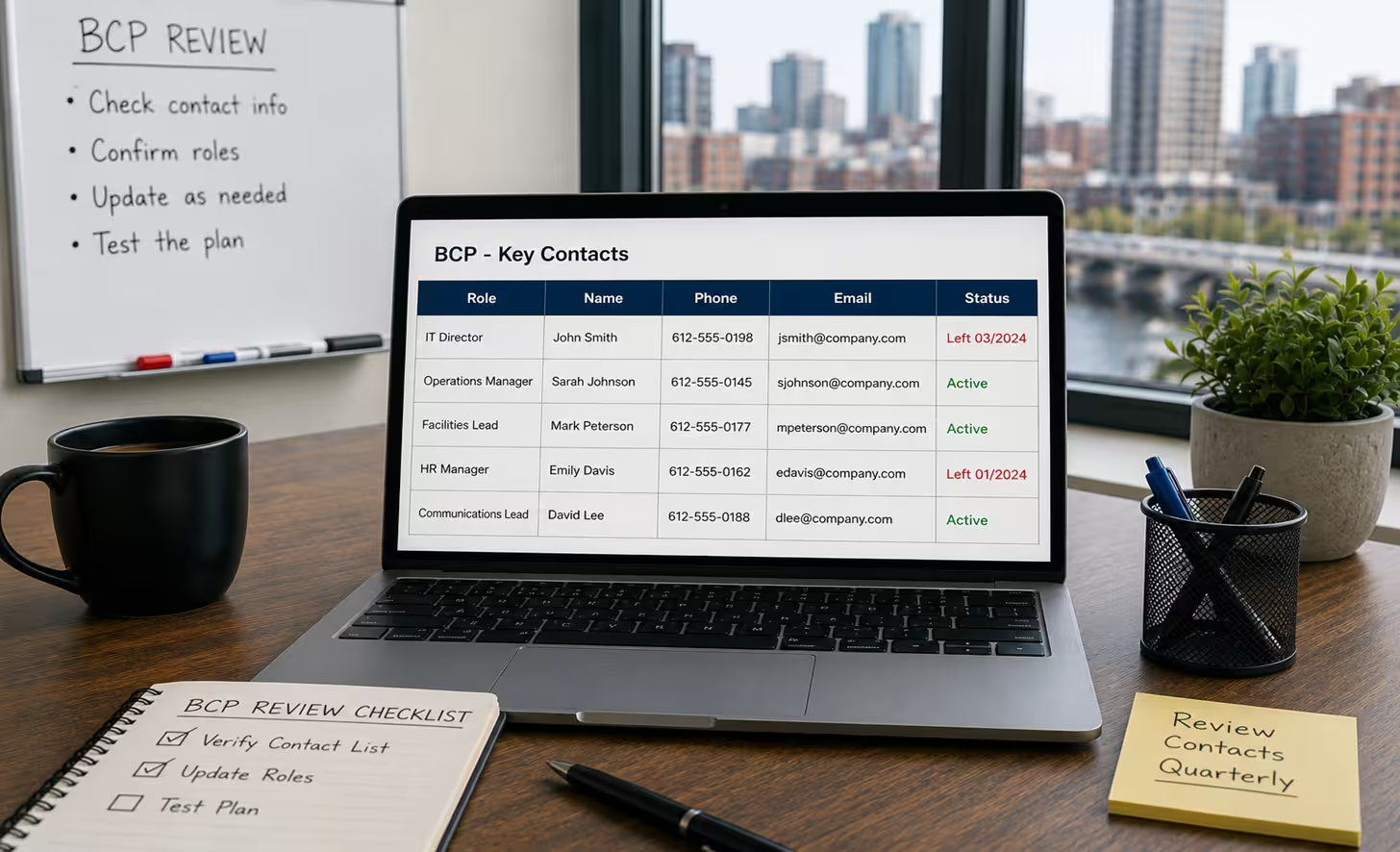
Emergency contact lists are usually the first thing to go stale in a continuity plan. One that still lists a former IT director, or an employee who left last spring, sends people to the wrong contact during an actual event.
Staff turnover is one of the most common reasons plans quietly stop working. It invalidates close to 30% of continuity contact lists within just six months, faster than most companies get around to reviewing the plan (GCG Enterprise Solution, 2026). New hires often have no idea a continuity plan exists, let alone what role they're supposed to play in it.
Run a quick name check first: does every role in the plan match a real person still on staff, with current contact information?
Recovery steps written for servers your company migrated off two years ago describe a system that no longer exists. No matter how carefully those steps were documented at the time, they won't work on the infrastructure that replaced it.
Two cloud outages in late 2025 show how fast this happens. An Azure configuration error on October 29 disrupted identity and application access across multiple regions, and an AWS DNS failure on October 20 affected services worldwide (Inoni, 2025). A plan written before a company depended on either provider doesn't account for that kind of failure.
New software platforms and a switch to cloud storage change what "recovery" actually means for a business. A new phone system does too. Recovery Time Objective (RTO) and Recovery Point Objective (RPO) targets set for the old environment usually need to change alongside them, since new systems often recover faster or slower than what they replaced.
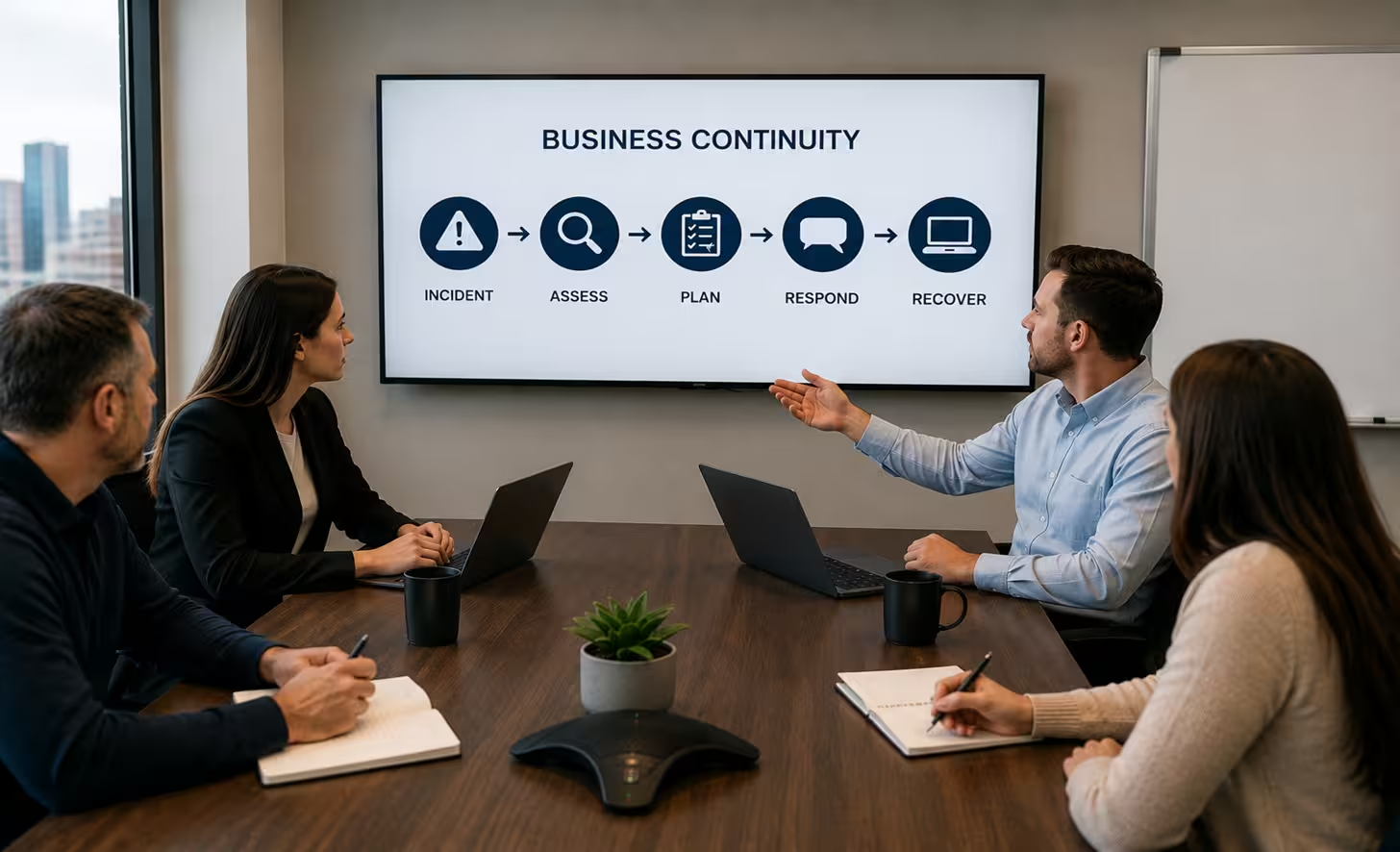
Untested plans are guesses about what will work, and guesses tend to fail under pressure. More than half of businesses that experience a disruption report an operational break of 8 hours or more, and an untested plan is a common reason why (Invenioit, 2026).
Only 49% of businesses worldwide have actually tested their plan, and tested plans get companies back up 2.5 times faster than untested ones (GCG Enterprise Solution, 2026; ZipDo, 2025).
A tabletop exercise, where the response team talks through a scenario step by step, takes an afternoon and surfaces gaps a written document can't. Skip that step, and those same gaps surface during the real event instead.
A business that has never run a drill, or hasn't run one in the last year, already has its answer.
Growth outpaces continuity plans faster than most companies expect. A plan built for one office won't automatically cover a second location, and one built around a single core vendor won't extend to a new supplier relationship either.
New business lines often depend on systems or partners that the original plan never mentioned. A company that looks meaningfully different today than it did when the plan was written needs a plan that reflects that difference.
Add mergers and acquisitions to this checklist, too, along with any major restructuring. Each of these events changes both the risks a company faces and the people responsible for managing them.
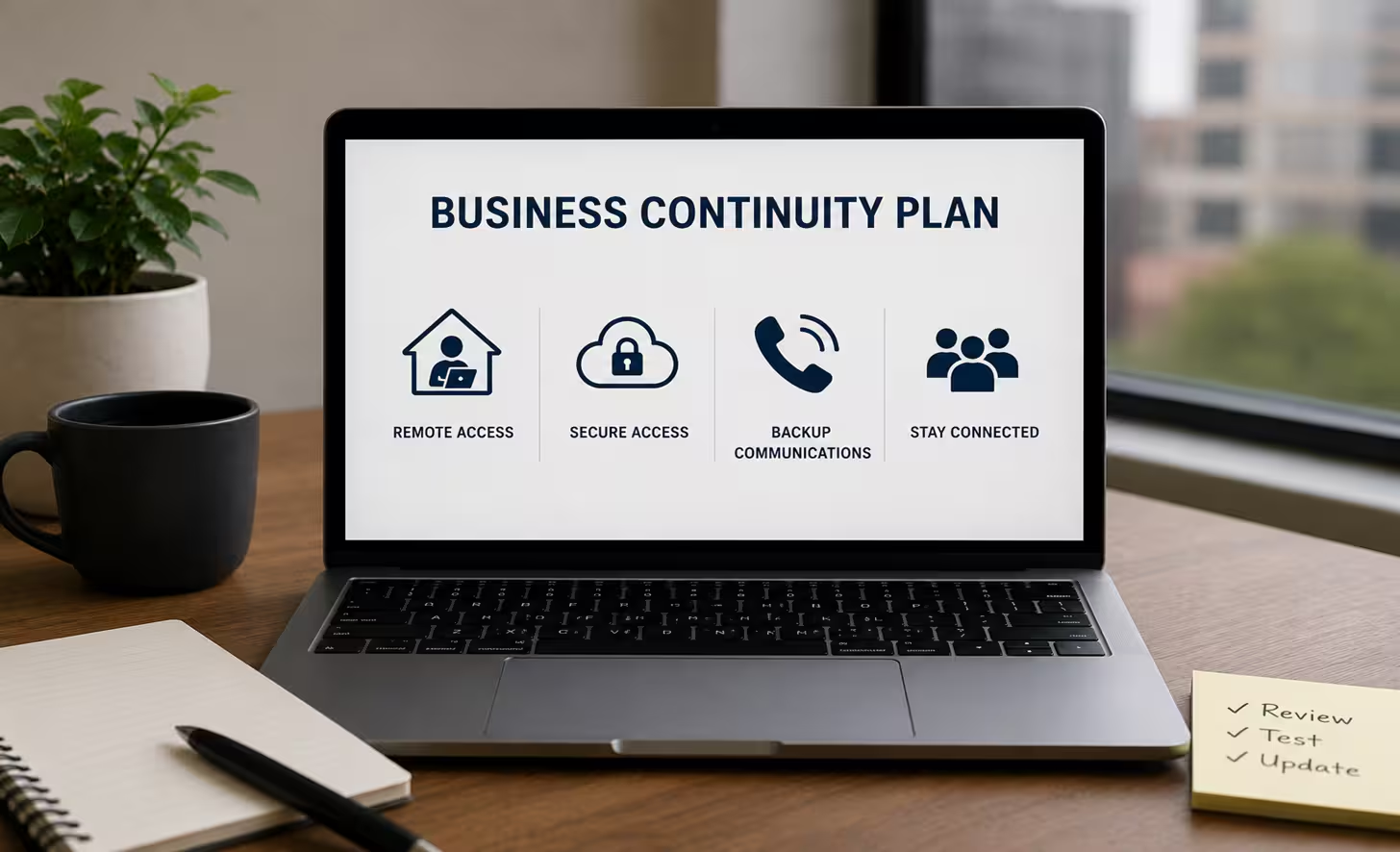
Remote and hybrid work broke many assumptions built into older continuity plans, starting with the assumption that everyone works from a single physical building. That assumption breaks down fast during a real disruption, especially a severe weather event that hits the office and employees' homes at the same time. We walk through exactly how that plays out for Minneapolis businesses in our severe weather planning guide.
Employees working from home need documented, secure access to files and applications that don't depend on the office network being online. Phone systems need a backup path, too. Only 22% of organizations have an up-to-date remote access policy, indicating that most plans are already behind on this point (ZipDo, 2025).
A plan that doesn't specify how remote staff stay connected during a disruption is missing a piece that's now central to how most companies actually operate.
Recovery Time Objective sets how long a system can stay down before the impact becomes unacceptable, and that number should reflect how the business runs today, not how it ran when the plan was first written. A payroll system that once tolerated a full day of downtime might now need to be back in four hours if the company has grown or changed how it pays staff.
Business continuity and disaster recovery planning need to work together here, too, rather than sit in separate documents. We cover that distinction in full in our comparison of business continuity and disaster recovery. A continuity plan that keeps people working means little if the RTOs behind it were never updated to match current operations.
Targets nobody has revisited in the last year are probably based on assumptions the business has already outgrown.
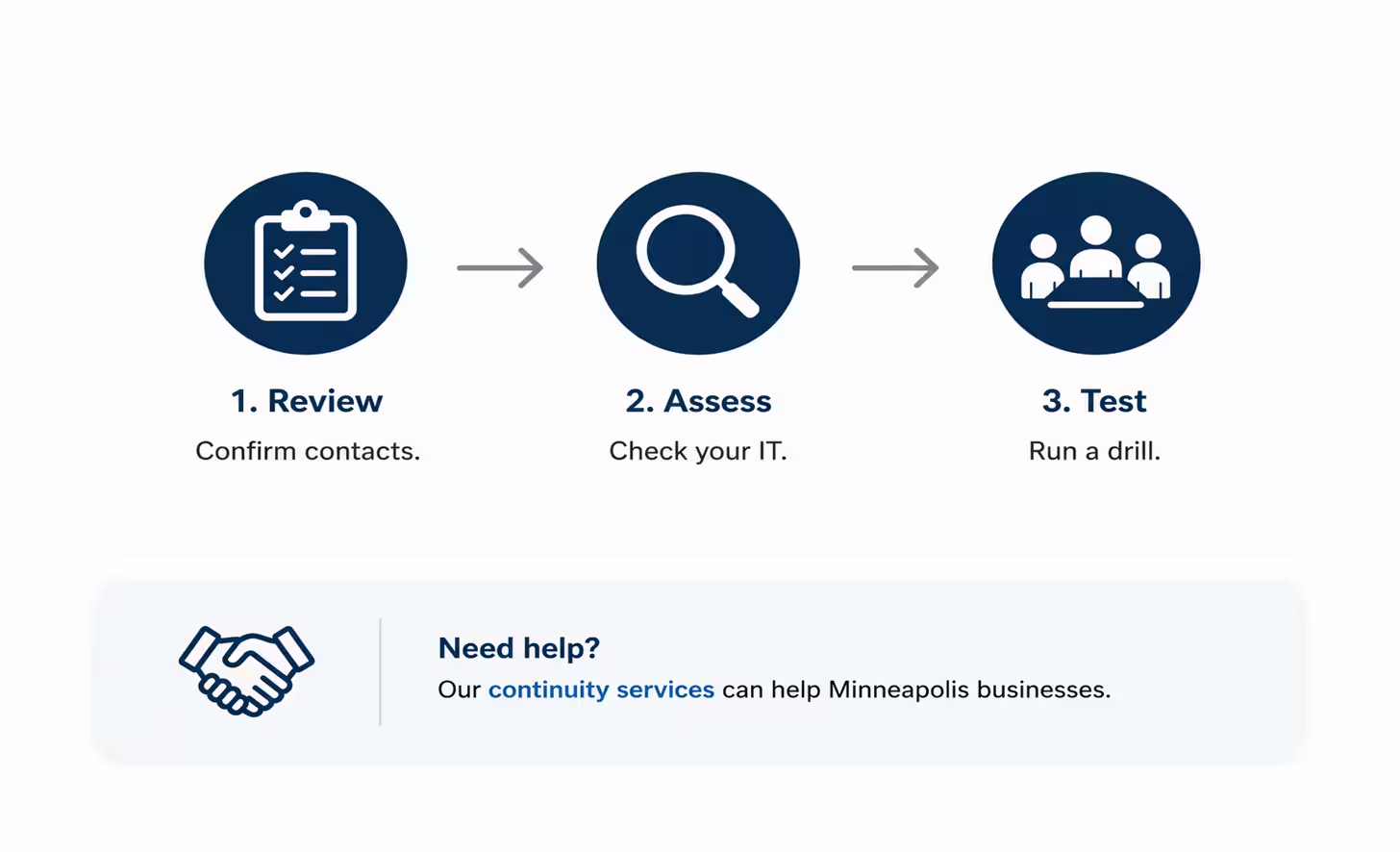
Finding even one of these signs doesn't mean starting over. It means scheduling a focused review: confirm the contact list, then walk through the current IT environment. After that, run a tabletop exercise with the team that would actually respond to a disruption.
Businesses that would rather have someone guide that review than run it solo can start with our business continuity services for Minneapolis businesses.
Most organizations review the plan in full once a year, with a lighter check every six months for higher-risk processes, plus an immediate review after any major change to staff or systems (Arcserve, 2025).
A merger, a major IT migration, a new office location, or a significant round of staff turnover are all reasons to review the plan outside the normal schedule, regardless of when the last review happened.
Check two things first: whether the named contacts still work at the company, and whether the described IT systems still exist. Then confirm the plan has actually been tested with a drill in the past year.
The plan slowly stops matching reality. More than half of businesses that face a disruption without a current plan report an operational break of 8 hours or longer (Invenioit, 2026).
Yes. Only 61% of businesses worldwide have a continuity plan in place, and small businesses are the least likely to have one, leaving them the most exposed when a disruption hits (Invenioit, 2026).
Yes. Recovery Time Objectives and Recovery Point Objectives should be reviewed alongside the continuity plan, since both are based on how current systems and operations actually work.